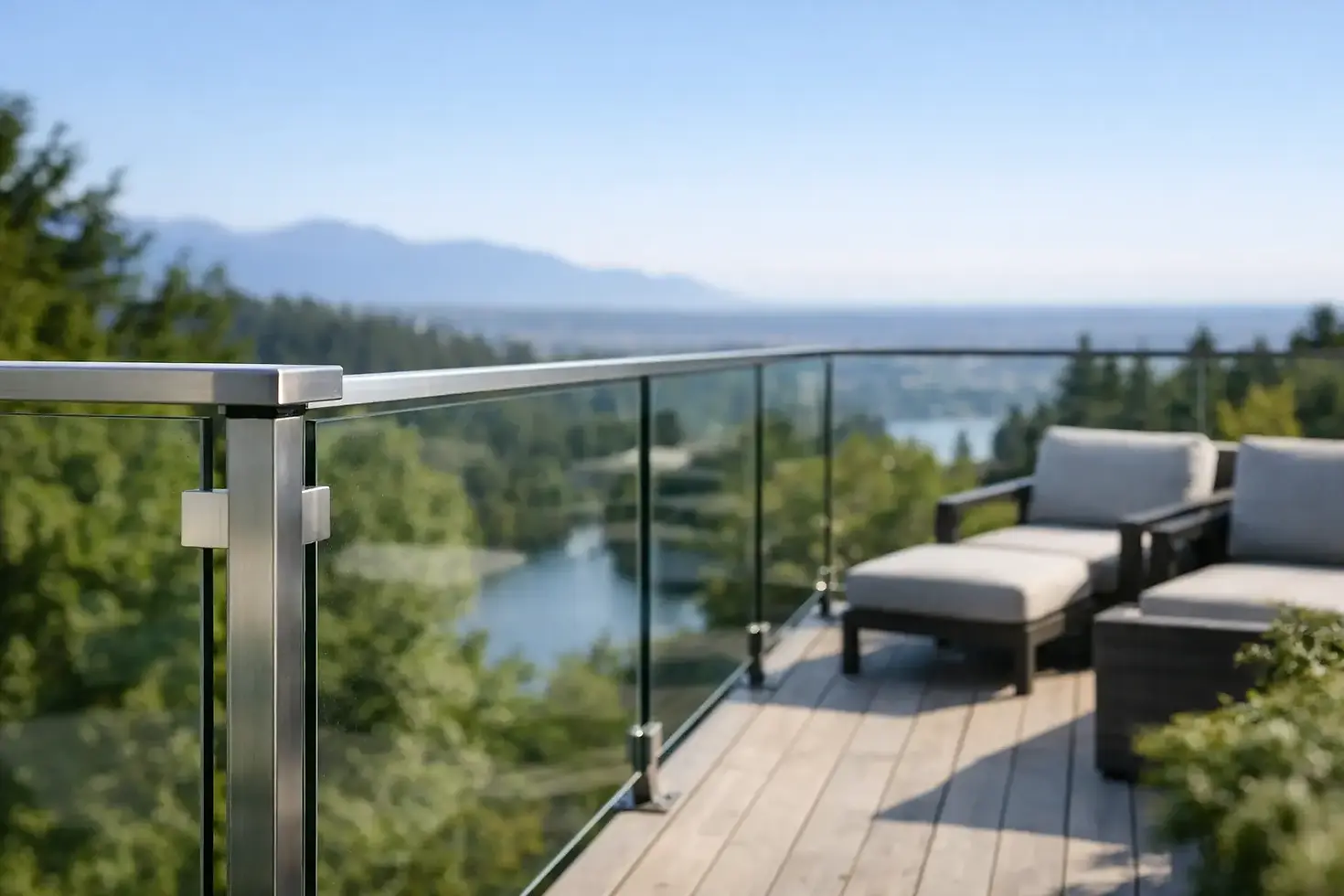
Is Glass Railing Safe for Decks and Balconies?
- Status Railings

- 2 days ago
- 6 min read
A clear railing can make a deck, balcony, or stairway feel more open, but it also has a serious job to do: prevent falls and withstand daily use. So, is glass railing safe? Yes, when it is designed for the application, made from the right safety glass, and installed with code-compliant hardware and structural support.
Glass railing is not a decorative panel held in place with a few clips. A properly built system is an engineered safety barrier. The glass, posts or base shoe, anchors, handrail, and the structure beneath it must work together. When one of those elements is undersized, poorly installed, or selected without regard for local building requirements, the appearance may still look clean, but the system is not doing its job.
Is Glass Railing Safe When Installed Correctly?
Professional-grade glass railing is safe because it uses safety-rated glass and purpose-built mounting systems designed to resist impact, pressure, and outward loading. The glass is substantially different from standard window glass. It is specified to break in a safer pattern or remain held together if damaged, reducing the risk of an open fall hazard.
The answer also depends on where the railing is installed. A guard around an elevated deck or balcony faces different forces than an interior stair guard. Exterior systems must also handle wind, temperature swings, moisture, and repeated movement in the supporting deck or concrete slab. That is why a railing should never be selected based on appearance alone.
A qualified contractor begins with the location, guard height, substrate, exposure, and local code requirements. From there, the system can be fabricated and anchored for the actual conditions of the project.
The Glass Matters: Tempered vs. Laminated Safety Glass
Most safe glass railing systems use tempered glass, laminated glass, or a combination of both depending on the design and code requirements. These are safety products, not interchangeable materials.
Tempered glass is heat-treated to be stronger than ordinary annealed glass. If it breaks, it is designed to fracture into many small pieces instead of large, sharp shards. It is commonly used in framed glass railing systems where posts, top rails, and panel supports provide additional containment.
Laminated glass consists of two or more glass layers bonded with a durable interlayer. If the glass cracks, the interlayer helps hold the pieces together. This is particularly valuable in frameless or minimally framed railing designs because the panel can remain in place after breakage rather than leaving an immediate opening.
Neither option is automatically better for every project. A framed aluminum-and-glass railing may be well suited to tempered panels, while a frameless balcony guard may require a laminated configuration and a compatible base shoe system. The right selection is based on the system design, required performance, and the applicable building code.
Safe Railing Depends on More Than the Panel
A strong glass panel cannot compensate for weak anchoring. The most critical safety details are often below the visible surface: the fasteners, blocking, structural framing, waterproofing, and mounting substrate.
On a wood deck, for example, railing posts or base-mounted hardware must connect to solid structural members. Attaching a guard to deck boards, thin fascia, or nonstructural trim is not an acceptable substitute for proper blocking and fastening. On concrete, installers must assess slab condition, edge distances, reinforcement, and the anchor system before drilling.
Frameless systems deserve particular attention. Their clean look comes from reducing visible posts and rails, but the engineering does not disappear. The glass must be correctly seated in a tested base shoe or secured with properly rated stand-offs. The base must be accurately aligned and firmly anchored to a structure capable of handling the required loads.
Water management also matters outdoors. Penetrations through a deck surface need correct flashing and sealing so that rain does not reach the framing and weaken the support over time. A railing can be secure on installation day and become less reliable years later if moisture damages the structure around its anchors.
Code Compliance Is a Safety Requirement, Not an Upgrade
Building codes establish minimum requirements for guard height, opening limitations, structural loading, handrails, and installation methods. These requirements help prevent common fall hazards, particularly for children, guests, and people using stairs or elevated outdoor spaces in low light.
Although exact requirements vary by jurisdiction and project type, a compliant railing typically addresses several issues: the required guard height for the drop, spacing that prevents a child from passing through or becoming trapped, resistance to prescribed loads, and suitable handrail provisions where required on stairs.
Glass has a practical advantage here. Because the panels are continuous, a well-designed system avoids the wide gaps that can occur with poorly spaced pickets. It can provide a secure barrier without blocking views of a yard, pool area, waterfront, or city skyline.
Code compliance is also especially important for commercial properties, multifamily buildings, and rental spaces. These environments receive more frequent use and may face additional accessibility, liability, and inspection considerations. Choosing a railing contractor with experience in custom code-compliant work helps prevent costly corrections after the project is complete.
What Can Make Glass Railings Unsafe?
Glass railing failures are uncommon when a quality system is professionally installed, but risks increase when corners are cut. The biggest concerns usually involve incorrect material selection, damaged glass, poor anchoring, or changes made after installation.
Using ordinary glass instead of specified safety glass is a serious mistake. So is drilling, cutting, or modifying tempered glass after it has been manufactured. Tempered panels must be fabricated to their final dimensions before the tempering process. Attempts to alter them afterward can cause sudden breakage.
Improper cleaning and maintenance can create issues as well. Abrasive pads, harsh chemicals, and metal tools can scratch glass or damage the finish on aluminum hardware. Minor surface marks do not always affect structural performance, but deep chips near edges, visible cracks, loose clamps, or movement in the railing should be inspected promptly.
Homeowners should also avoid using a glass guard as a support for planters, string lights, privacy screens, or heavy decorations unless the railing system was specifically designed for those added loads. A guard is built to resist code-required forces, not unlimited additional weight or leverage.
Glass Railings for Families, Pets, and Everyday Use
For families, glass railings can be a very practical option. Smooth panels do not create footholds that make climbing easier, and the clear barrier makes it easier to see children playing on a deck or near a stairway. Unlike some picket designs, there are no horizontal rails that invite climbing when the system is configured appropriately.
For pets, glass can reduce the temptation to push through gaps or react to movement outside the railing. Smaller pets are also less likely to slip through a properly designed glass barrier. That said, a railing should not replace supervision, especially on an elevated balcony or near an open stair.
The trade-off is maintenance. Glass shows fingerprints, water spots, pollen, and dust more readily than aluminum pickets. In exchange, it delivers an unobstructed view and a more refined architectural finish. Routine cleaning with a non-abrasive glass cleaner and soft cloth is usually enough to keep panels looking clear.
Choosing a System That Will Last
The safest and longest-lasting glass railing starts with an honest assessment of the site. Consider the elevation, use of the space, deck or balcony construction, wind exposure, drainage, and whether a top rail is preferred or required. Then select glass thickness, mounting hardware, and aluminum components that are built for those conditions.
For many exterior projects, an aluminum-and-glass railing offers an effective balance of visibility, strength, and straightforward maintenance. Framed systems provide defined support around the panels and can be an excellent choice for decks, porches, and stairs. Frameless glass creates a more open result, but demands greater precision in engineering, fabrication, and installation.
Do not judge a system only by the thickness of the glass or the number of visible fasteners. The full assembly matters. Quality fabrication, accurate layout, structural attachment, and careful finishing are what turn a collection of materials into a safe guardrail.
If you are planning a new deck, balcony, porch, or stair upgrade, bring in a qualified railing specialist before the supporting structure is finished. Early planning gives the installer time to coordinate blocking, waterproofing, anchors, and code details, resulting in a cleaner installation that is built to protect the people who use the space for years.


Comments