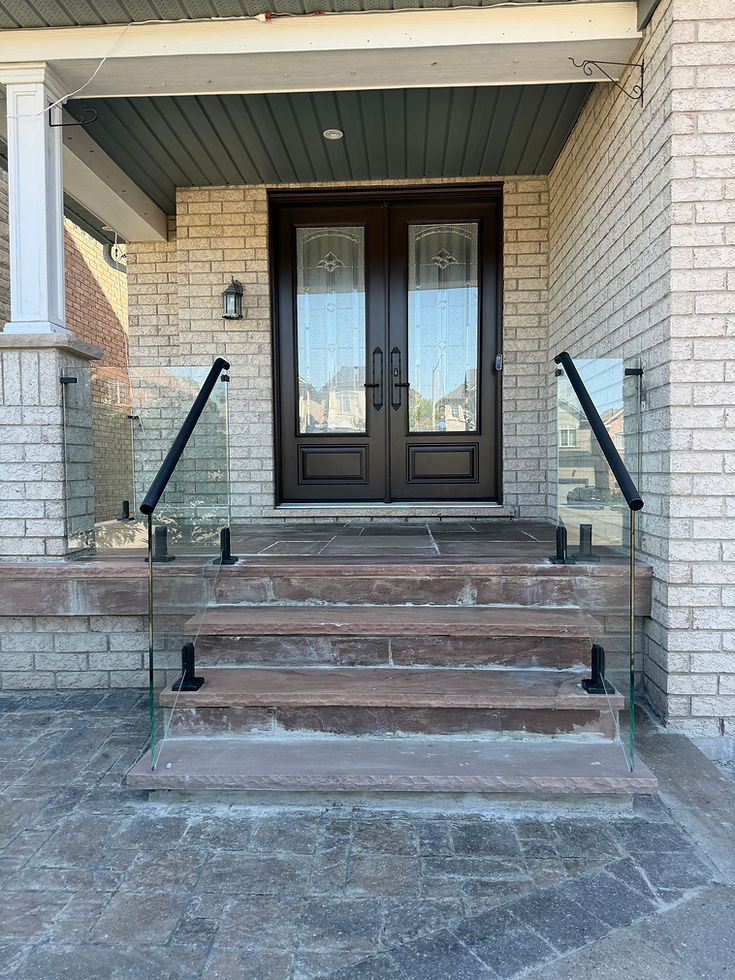
Outdoor Stair Handrail Installation Done Right
- Status Railings

- Jul 3
- 6 min read
A loose or poorly placed rail usually does not look like a major problem until someone misses a step in the rain. That is why outdoor stair handrail installation is not just a finishing detail. It is a safety system, a code item, and a permanent part of how people move through your property every day.
For homeowners, builders, and property managers, the right handrail has to do more than pass a quick visual check. It needs to feel solid in the hand, remain stable through freeze-thaw cycles, and suit the architecture around it. On exterior stairs, the installation matters just as much as the material. Even a good rail can underperform if the anchoring, spacing, or layout is wrong.
Why outdoor stair handrail installation matters
Exterior stairs take more abuse than most people realize. Water, snow, ice, salt, temperature swings, and constant foot traffic all work against the structure. A handrail is there to provide support, but it also has to maintain that support year after year without shifting, loosening, or corroding.
There is also the code side. Handrails on outdoor stairs are often required based on the number of risers, stair configuration, and the surrounding conditions. Requirements can vary by jurisdiction, so the right approach is never guesswork. If a rail is installed at the wrong height, does not provide proper graspability, or fails under load, the problem is bigger than appearance. It can delay inspections, create liability, and force a costly redo.
For many properties, the handrail also shapes first impressions. A bulky steel rail may be functional but feel out of place on a modern porch. A wood rail may look warm on day one but demand frequent maintenance and start to deteriorate sooner than expected. Good installation balances code compliance, durability, and design from the start.
Choosing the right system for outdoor stairs
Not every exterior stair rail should be built the same way. The right system depends on stair width, exposure to weather, how the stairs are used, and the look you want to achieve.
Aluminum handrails
Aluminum is one of the strongest options for exterior stair applications because it is lightweight, corrosion-resistant, and low maintenance. It performs well in wet and cold conditions and does not require the ongoing sanding, staining, or painting that wood does. For many residential and commercial properties, aluminum gives the cleanest balance of strength and appearance.
It also works well with modern exterior design. Powder-coated finishes hold up well over time, and the profiles can be kept simple and refined. If your goal is a handrail that looks sharp and lasts for years, aluminum is usually the practical choice.
Glass and aluminum combinations
On some stair layouts, especially where the stairs connect to a porch, deck, or raised landing, a handrail may be part of a larger guardrail system. In those cases, aluminum and glass can create a more open look without sacrificing safety. This is especially useful when preserving sightlines matters, such as at front entries, elevated terraces, or commercial access points.
That said, glass is not the answer for every stair. It depends on the exposure, the mounting conditions, and the broader railing design. The key is making sure the entire assembly is engineered and installed as one system rather than treated as separate pieces.
What determines a quality installation
The phrase outdoor stair handrail installation sounds simple, but the actual work involves several decisions that affect long-term performance.
Accurate measurement and layout
A professional installation starts with exact field measurements. Stair pitch, tread depth, riser count, landing transitions, and mounting surfaces all need to be checked before fabrication begins. Exterior stairs are rarely perfectly uniform, especially on older porches or concrete entries. If measurements are rushed, the finished rail may not align properly, which can lead to awkward grasping points, inconsistent clearances, or visible gaps.
Strong anchoring
The connection points matter as much as the rail itself. A handrail mounted into weak substrate, aging masonry, or poorly framed stair components may feel solid at first but loosen over time. Proper anchoring depends on the surface - concrete, wood framing, composite stair systems, and masonry each require a different approach.
This is one of the main differences between a rail that simply gets installed and one that is built to last. Good installers evaluate the structure beneath the finished surface, not just the appearance above it.
Code-aware fabrication
Handrail height, graspable profile, return details, and continuity all have to be considered before fabrication. This is where many off-the-shelf solutions fall short. They may seem convenient, but standard components do not always fit the stair geometry or local code expectations.
Custom fabrication allows the rail to match the actual site conditions. It also helps maintain a cleaner visual line, which matters on front-facing stairs and higher-end exterior renovations.
Common mistakes in outdoor stair handrail installation
The most common issue is treating the handrail as an afterthought. By the time it is addressed, the stair finish is complete, the substrate is hidden, and the best mounting options may already be limited. A handrail should be part of the stair plan early, not something added only when inspection or safety concerns force the decision.
Another mistake is choosing materials based only on upfront cost. Wood may seem less expensive initially, but exterior maintenance adds up. Steel can be strong, but if the finish fails or rust develops, repairs become ongoing. In many cases, a properly installed aluminum system offers better long-term value because it avoids repeated refinishing and replacement cycles.
There is also the problem of poor proportion. Some handrails technically meet the basic function but look oversized, undersized, or disconnected from the architecture. On a well-designed exterior, the rail should feel intentional. It needs to support the stair visually as well as structurally.
When replacement makes more sense than repair
Not every older stair rail should be repaired. If the system is rusting at connection points, moving under load, pulling away from the structure, or no longer aligned with code expectations, replacement is often the smarter investment. Repair may solve one visible issue while leaving the underlying problem in place.
This comes up often with aging wood rails. Surface damage can be obvious, but the bigger concern is usually hidden deterioration around fasteners and posts. Once water gets in and freeze-thaw damage starts, reliability drops quickly. If the stairs are a primary access point, it rarely makes sense to gamble on another temporary fix.
A replacement also gives you the chance to improve the overall look of the entrance. Clean aluminum profiles or a coordinated glass-and-aluminum system can modernize the property while reducing future maintenance.
What to expect from a professional installer
A strong contractor should be able to assess the stair conditions, explain what is required for compliance, recommend suitable materials, and fabricate a system that fits the property instead of forcing a generic solution. Clear communication matters here. You should know how the rail will be mounted, what the finish will look like, and how the installation will handle exposure to weather.
Fast quoting is helpful, but precision matters more than speed alone. The best results come from installers who understand exterior railing systems in detail and treat measurement, fabrication, and final anchoring as one coordinated process. That is especially important on custom homes, renovation projects, and commercial sites where safety and appearance carry equal weight.
For properties that need a modern, low-maintenance solution, specialists like Status Railings focus on aluminum and glass systems designed for long-term exterior performance. That kind of specialization can make a real difference when the goal is not just to install a rail, but to install one that stays safe, looks clean, and fits the building properly.
Outdoor stair handrail installation and long-term value
A well-installed exterior handrail protects people first. It also protects the investment you have made in the stairs, porch, or entry itself. If the rail is stable, code-aware, and built from materials that can handle the weather, you avoid the cycle of patchwork repairs and premature replacement.
That does not mean every project needs the same solution. A compact set of front entry steps may call for a straightforward aluminum handrail. A larger stair connected to a raised deck or porch may need a more integrated railing system. The right answer depends on the structure, the use case, and the finish you want.
When you look at outdoor stairs, think beyond the rail as a simple accessory. It is one of the hardest-working safety features on the property, and once installed correctly, it should feel natural to use, solid under hand, and right for the space for years to come.


Comments