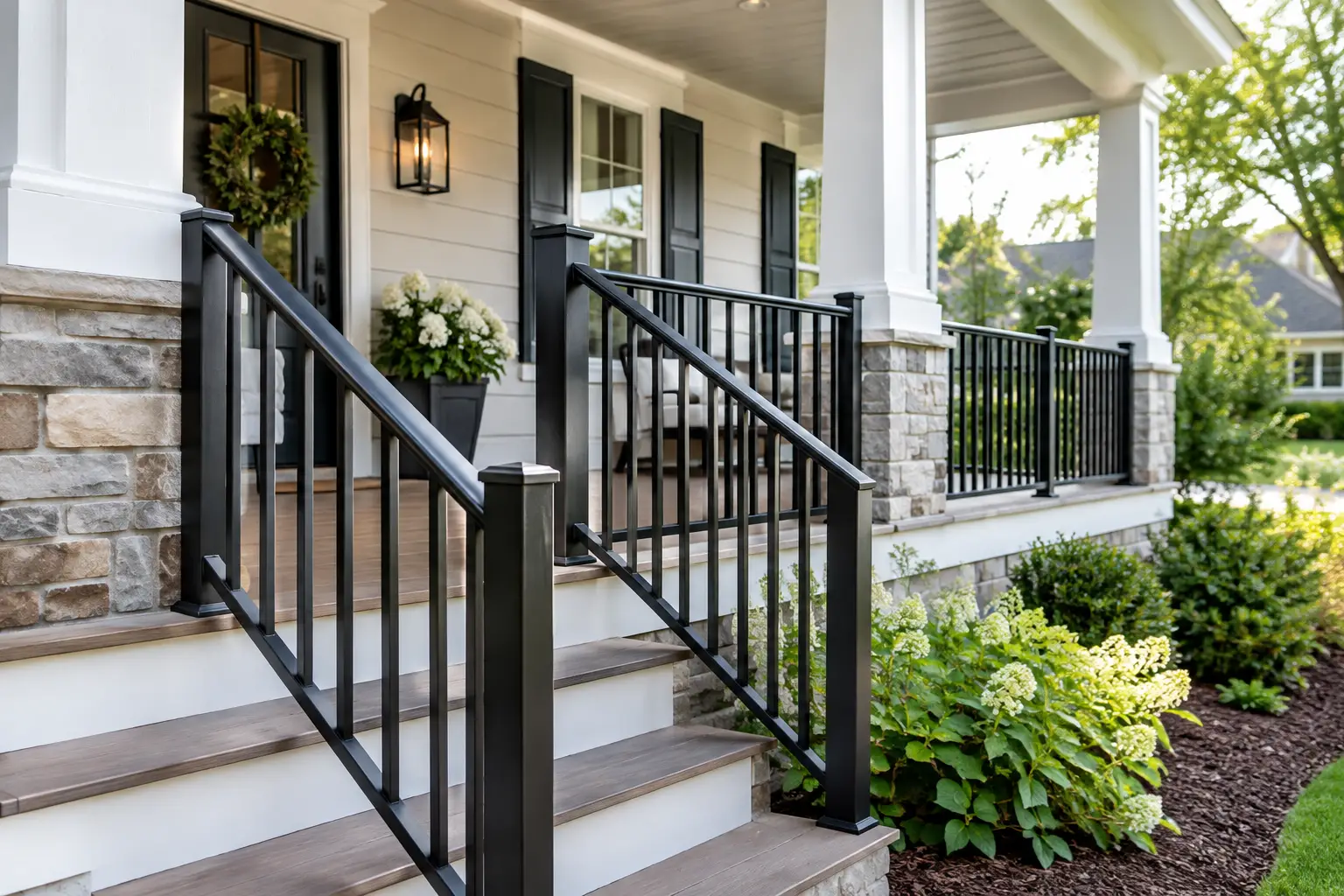
Best Railings for Front Porches That Last

A front porch railing has to do more than look finished. It needs to create a secure boundary at steps and elevated landings, meet local code requirements, stand up to changing weather, and suit the architecture of the home. The best railings for front porches balance all four. A system that looks sharp on installation day but rusts, loosens, or blocks the porch’s best features a few years later is not a long-term upgrade.
For homeowners replacing aging wood, builders finishing a new entrance, or property managers addressing a safety concern, aluminum and glass are often the strongest modern choices. The right option depends on porch height, sightlines, maintenance expectations, budget, and the character of the property.
What Makes a Front Porch Railing a Good Choice?
A good porch railing begins with structure. Posts must be properly anchored to the porch framing or concrete, connections must be designed to resist force, and the handrail must be comfortable and continuous where stairs require one. These details affect safety far more than the color or profile of the railing.
Material performance matters just as much. Front porches are exposed to rain, snow, salt, sun, and repeated temperature swings. Wood can be attractive, but it demands ongoing painting, staining, and inspection. Steel can be strong, yet coatings can fail over time, especially where moisture collects. Quality aluminum avoids rust, requires minimal upkeep, and delivers a crisp, consistent finish that works with both traditional and contemporary exteriors.
Finally, consider how the railing changes the way the porch feels. A heavy design can make a small entry look enclosed. An open picket pattern or glass infill can preserve light and make the front elevation feel more spacious.
Best Railings for Front Porches by Style and Performance
Aluminum picket railings: the dependable all-around option
Aluminum picket railings are one of the best choices for most front porches because they are durable, adaptable, and visually clean. Vertical pickets provide a traditional railing appearance while offering better weather resistance and lower maintenance than wood. They work well on everything from compact concrete stoops to wider covered porches and stair runs.
Black is a popular finish because it creates definition against brick, stone, siding, and light-colored trim. Bronze, white, and custom colors may also suit the home’s exterior palette. The key is selecting a powder-coated system made for exterior use, with properly sized posts and secure mounting details.
Picket railings are especially practical when privacy is not a concern and the goal is a clear, code-conscious guard without obstructing the view of the front door, landscaping, or masonry details. They are generally more cost-effective than glass systems while still providing a refined, permanent result.
Aluminum-and-glass railings: modern visibility with structure
Aluminum-and-glass railings combine powder-coated aluminum posts and rails with glass panels. This is a strong option for homeowners who want the structure and defined lines of an aluminum system without the visual interruption of closely spaced pickets.
On a front porch, glass can keep an attractive stone façade, landscaped walkway, or open neighborhood view in sight. It also allows more light through the railing, which can make a covered porch feel less shaded. Framed glass systems are often a practical middle ground between a standard picket railing and a fully frameless installation.
The trade-off is maintenance. Glass does not rot or rust, but it will show water spots, pollen, and fingerprints more readily than pickets. For a highly exposed porch near a busy street or mature trees, plan on periodic cleaning. Using quality safety glass and professionally designed drainage and mounting details is essential.
Frameless glass railings: the cleanest architectural look
Frameless glass railings are designed for properties where uninterrupted sightlines are the priority. They can create a high-end, minimal appearance that pairs particularly well with modern homes, renovated urban properties, and porches with a strong view or distinctive cladding.
Because the glass panels are the visual focus, installation precision is non-negotiable. Panel spacing, hardware alignment, edge finishing, anchoring conditions, and required guard height all need to be addressed before fabrication. Frameless systems are not simply decorative glass placed at the edge of a porch. They are engineered guard systems that must perform under real loads.
This option is usually the higher investment choice. It is best suited to homeowners who value a contemporary finish and are willing to maintain clear glass surfaces. On smaller porches with little surrounding view, the added cost may not provide the same visual return as a well-designed aluminum picket railing.
Privacy panels: useful where exposure is the real issue
Not every front porch needs a fully open guard. On homes close to sidewalks, neighboring driveways, or busy streets, privacy panels can provide separation without enclosing the entire entrance. Aluminum privacy screens can be incorporated beside stairs, around a sitting area, or along one exposed side of a porch.
They are not a replacement for a code-required railing unless designed and installed as part of an approved guard system. Their greatest value is comfort: they can reduce direct sightlines while maintaining a modern exterior appearance. Slatted aluminum panels are often preferable to solid walls because they allow airflow and avoid making the porch feel boxed in.
Choose the Railing Around the Porch, Not Just the House
The same railing can look completely different depending on the porch structure. A narrow set of front steps needs a handrail that is easy to grasp and positioned correctly. A raised porch needs a code-compliant guard at the perimeter. A ground-level landing may not require a guard, but it can still benefit from a handrail for stability and visual definition.
Start by looking at the existing conditions. Concrete porches may require different anchoring methods than wood-framed decks. Brick veneer is not always an appropriate structural mounting surface. Older porches can also hide deteriorated framing, loose stairs, or uneven surfaces that should be addressed before a new railing is installed.
Proportion is another consideration. Thin pickets and modest posts often suit a compact bungalow entrance, while larger posts or glass panels can complement a wider contemporary porch. If the porch includes columns, shutters, decorative trim, or stone piers, the railing should support those features rather than compete with them.
Code Compliance Is Part of the Design
A porch railing that appears sturdy is not necessarily built to code. Guard height, picket spacing, stair geometry, handrail shape, load requirements, and post attachment methods are all regulated. Requirements can differ based on whether the surface is a porch, deck, landing, or stairway, as well as its height above grade.
This is why off-the-shelf railing kits can create problems when they are cut down, mounted to unsuitable surfaces, or used without considering local requirements. A professional installer should evaluate the actual site conditions and specify a system that fits the project.
For properties in Ontario, building code requirements should be reviewed before fabrication, particularly for elevated porches, stairs, and custom glass guards. Status Railings approaches each installation with this structural review in mind, so the finished system is designed to look precise and perform as intended.
How to Make the Right Material Decision
If your priority is long-term value and easy upkeep, aluminum picket railings are difficult to beat. They provide the most versatile fit across home styles and typically need only occasional washing. If you want a more open, contemporary result, aluminum-and-glass systems offer visibility without giving up a defined frame. Frameless glass is best reserved for projects where clean sightlines are central to the design and the budget supports custom fabrication and careful installation.
Do not choose solely by the lowest initial price. Repainting wood, repairing rot, treating rust, and replacing loose components can make a cheaper railing more expensive over its lifespan. A properly fabricated aluminum or glass system is an investment in safety, curb appeal, and fewer maintenance demands over the years.
The strongest front porch railing is one that fits the home, the exposure, and the way people use the entry every day. Before selecting a style, have the porch measured, the mounting surfaces reviewed, and the required safety details confirmed. That preparation is what turns an attractive railing into a durable part of the property.


Comments